
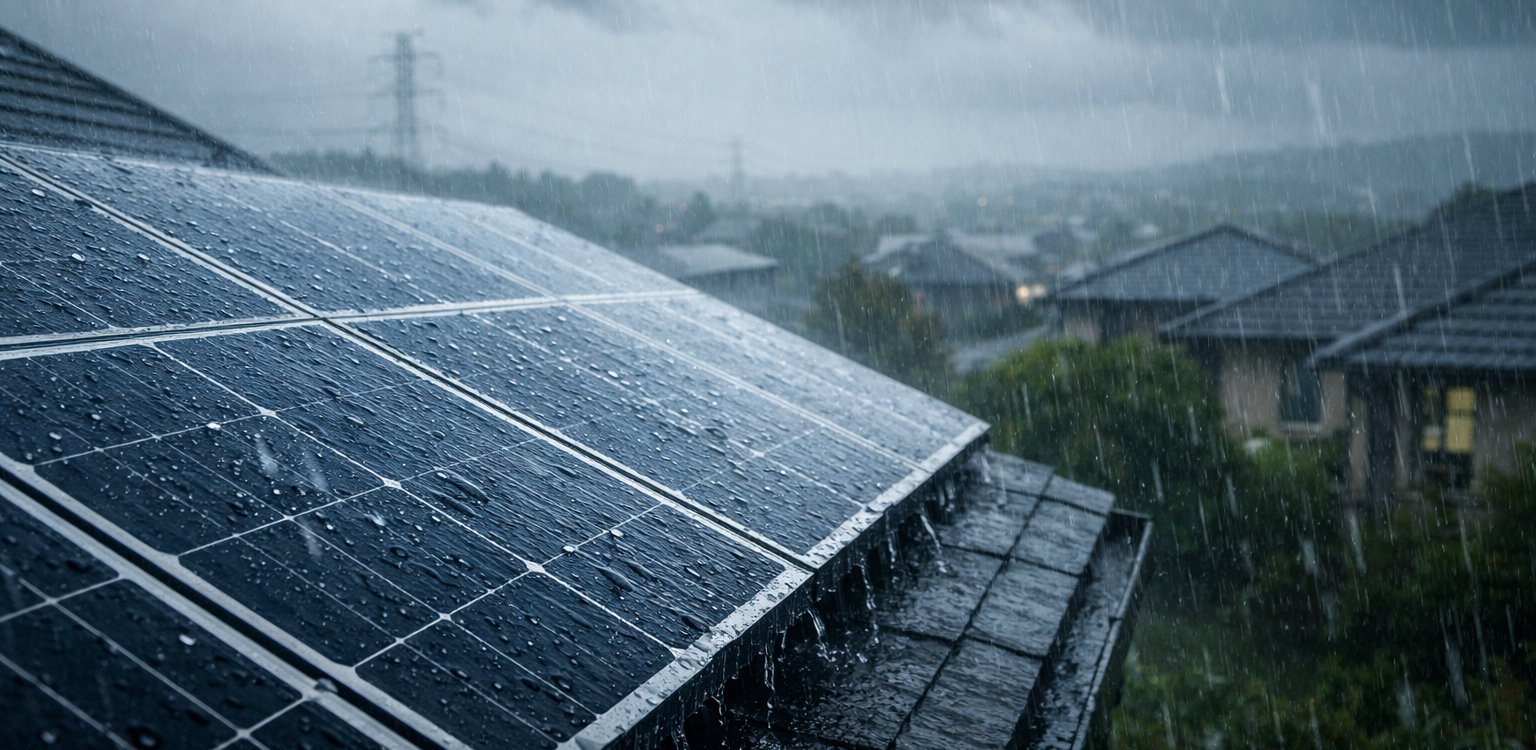
When South Africa enters a stretch of persistent rain or heavy cloud cover, many people start to wonder whether their solar system will cope. It’s a common concern, especially for those who are still considering solar and want to understand how reliable it is during long periods of poor weather. The assumption is often that “no sun means no power,” but modern systems are designed with far more resilience and flexibility than most people realise.
Solar panels don’t need direct sunlight to generate electricity. They continue to produce energy under cloudy conditions, just at reduced output. The real question is not whether panels work in bad weather, but whether the system as a whole has been designed to support your needs during those periods. That’s where proper sizing, realistic consumption analysis and battery integration become essential.
Why battery capacity matters more than sunshine hours
A well‑designed hybrid system is built around your lifestyle or business operations, not the weather forecast. Batteries play a central role in this. They store excess energy generated on good days and release it when production dips, thus smoothing out the natural variability of weather patterns.
This is why system sizing is so important. A system that is sized only for perfect sunny days will struggle during extended overcast periods. But a system designed with realistic consumption data, appropriate battery capacity and the right inverter configuration will continue to support your essential loads even when the weather turns.
In many cases, underperformance during rainy spells is not a weather problem at all – it’s a design problem. When the system is built around actual usage patterns, it remains reliable across seasons.
Separating myths from measurable performance
There are many myths about solar and weather:
- Panels “switch off” in the rain
- Batteries can’t cope with cloudy weeks
- Solar is only viable in consistently sunny climates
None of these myths are true. What matters is the quality of the design, the accuracy of the load assessment and the balance between generation and storage.
A properly engineered system anticipates variability. It doesn’t rely on perfect conditions but is designed for the real world.
Do you need guidance without the pressure to buy?
If you’re considering solar and want clarity on how a system would perform in your specific environment, you’re welcome to reach out. A conversation now can help you understand what reliable, weather‑resilient design looks like for your home or business and can protect you from investing in an inappropriate system you’ll regret later.